Skip to content

Food Dehydrators

Commercial Food Dehydrators in Toronto & Canada

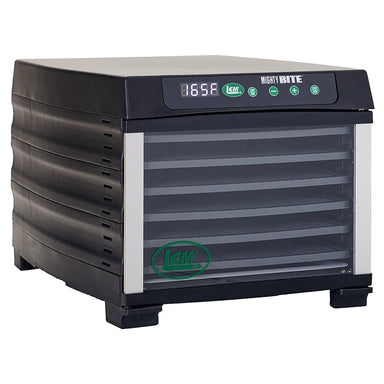
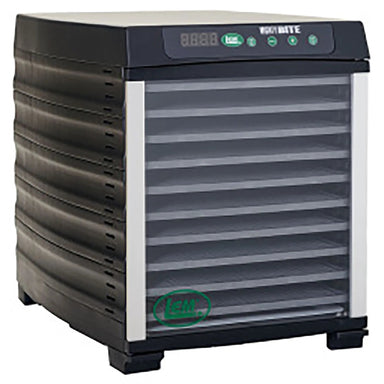
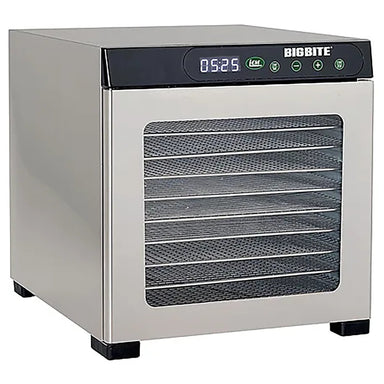
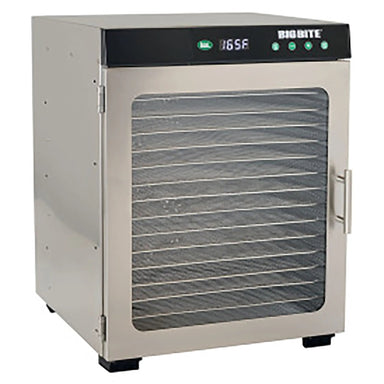
Food dehydrators pull moisture out of meat, fruit, and vegetables slowly and evenly, turning them into shelf-stable jerky, dried fruit, and dehydrated garnishes without a smoker or a walk-in full of racks. Butcher shops and delis lean on LEM's Mighty Bite lineup — the LEM 1729 6-Tray and LEM 1730 10-Tray both run a 95°F to 167°F range with a 24-hour digital timer, enough control to dry jerky low and slow or push through fruit and vegetable snacks faster. For higher volume, LEM's BigBite Series steps up to stainless steel construction and a wider 95°F to 176°F range — the LEM 1732 16-Tray adds a second rear-mounted fan so a full load dries evenly, not just the trays closest to the airflow. The Waring WDH10 rounds out the lineup with a see-through glass door and five programmable memory stations for repeat batches. No matter where you're located — a butcher shop in Toronto, a deli in Mississauga, or right here in Vaughan — Phoenix Food Equipment gets food dehydrators to you across the GTA and nationwide across Canada.

Frequently Asked Questions

Common questions we hear from operators.

What's the difference between a food dehydrator and a smoker for making jerky?

A dehydrator dries meat with steady low heat and constant airflow, pulling moisture out slowly enough to hit a safe internal temperature without adding smoke flavor or relying on wood chips and vent control. A smoker cooks and flavors the meat at the same time, which is great for flavor but harder to hold at a precise drying temperature for hours on end. For straight jerky production, a dedicated unit like the LEM 1731 BigBite gives you a 95°F to 176°F range and stainless steel construction built for repeated batches, without tying up a smoker that's needed for other cooking. Most commercial kitchens run both — a smoker for flavor-forward products and a dehydrator for consistent, food-safe jerky runs.

How many trays do I need in a commercial food dehydrator?

Tray count comes down to batch size and how often you're running the machine. A 5 to 6-tray unit like the LEM 1152 or LEM 1729 (already linked above) suits a lower-volume kitchen making jerky or dried garnishes a few times a week, while a 10-tray dehydrator covers most butcher shops and delis running regular batches. For high-volume production, LEM's 16-tray BigBite or the Waring WDH10's 10 stainless trays and 14 square feet of drying space keep a fuller rotation going without needing a second machine. As a rule of thumb, size up if you're drying multiple products (jerky, fruit, herbs) in the same day, since each needs its own tray temperature and timing.

What temperature should a commercial dehydrator run at for jerky versus fruit?

Jerky needs to hit a food-safe internal temperature, so most commercial dehydrators run meat at 160°F or higher, or use a lower drying temperature followed by a full oven or smoker heat step to finish it safely — always check current food-safety guidance for raw meat. Fruit, vegetables, and herbs dry well at a gentler 95°F to 135°F, low enough to preserve texture, color, and flavor without cooking them. That's why our dehydrators are built with a wide adjustable range — the LEM 1729 and LEM 1730 (already linked above) run 95°F to 167°F, and the LEM 1732 and Waring WDH10 (already linked above) push up to 176°F to 180°F, covering both ends of the job in one machine.