Skip to content

Charbroilers

Commercial Charbroilers in Toronto & Canada

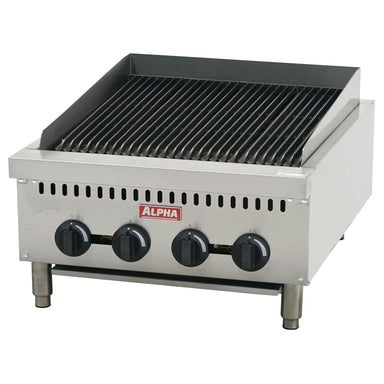
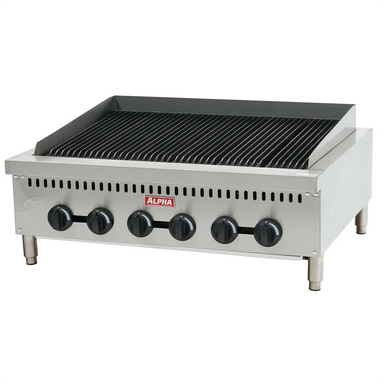
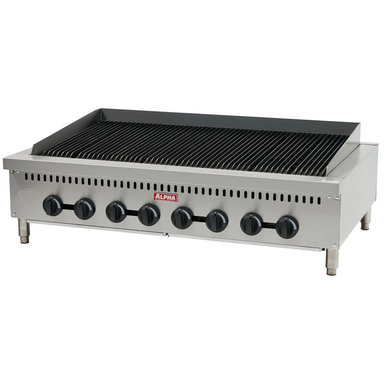
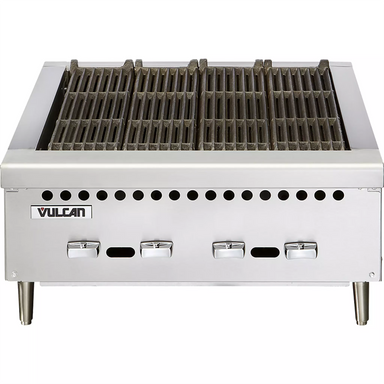
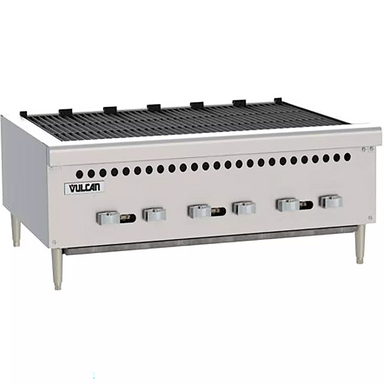
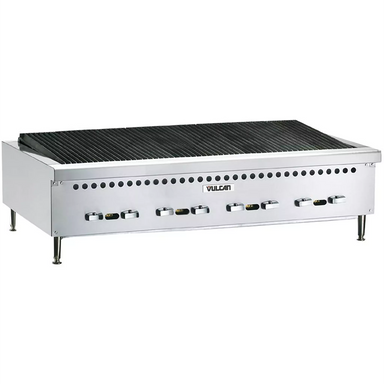
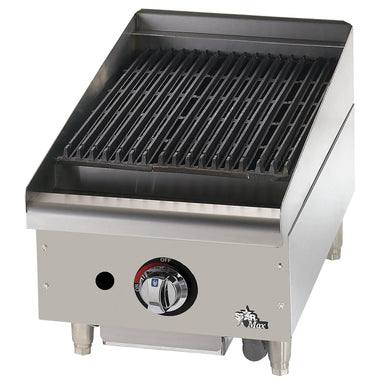
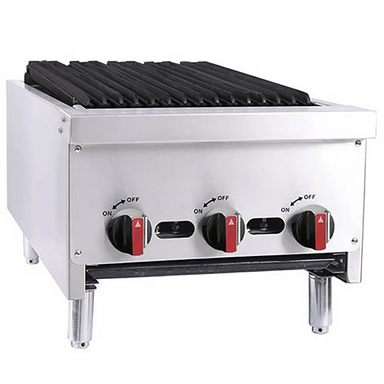
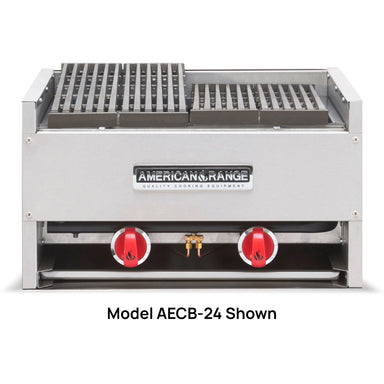
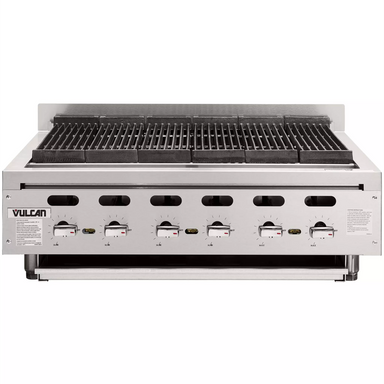
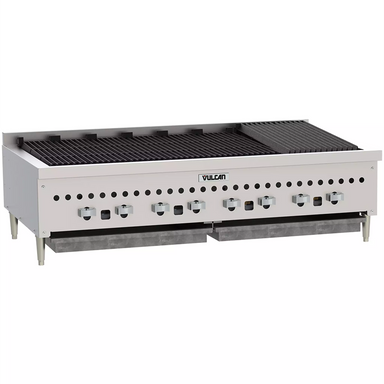
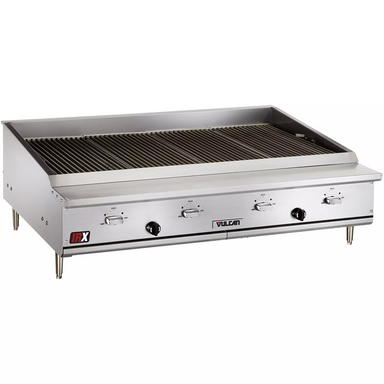
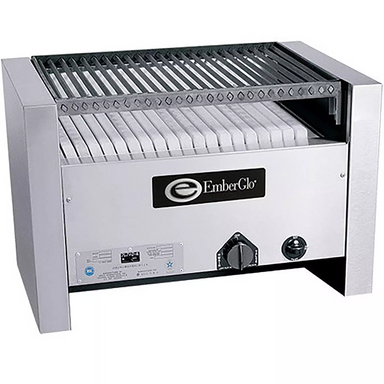
Phoenix Food Equipment's Charbroilers collection covers commercial charbroilers for steaks, burgers, and flame-grilled flavor, in radiant, lava rock, and ceramic brick styles across countertop and floor models. Alpha's AHCB Series and Atosa's ATRC/ATCB Series both offer 24" to 48" heavy duty charbroilers in either radiant or lava rock configuration, while Vulcan's VACB, VCCB, and VTEC Series scale from a compact 14" up to a full 72" wide. Emberglo specializes in ceramic brick radiant broilers, with both countertop (C) and floor (F) models across the 25, 31, and 41 Series, plus a dedicated electric line for kitchens without gas. For something different, Cookshack's wood pellet fired charbroilers bring real wood-fired flavor without an open gas flame. American Range's AECB Series rounds out the lava rock lineup, and EFI's combo cooktops pair a charbroiler section with a griddle or open burners on one unit for a tighter cooking line. Whether you're grilling steaks in Toronto, burgers in Mississauga, or kabobs right here in Vaughan, we ship commercial charbroilers across the GTA — Richmond Hill and Markham included — and nationwide across Canada.

Frequently Asked Questions

Common questions from operators buying this kind of equipment.

What's the difference between a radiant and a lava rock charbroiler?

Both styles cook with an open flame underneath the grates, but they conduct heat differently. A radiant charbroiler, like Vulcan's VCRB Series or Emberglo's ceramic brick broilers, uses metal or ceramic radiants positioned over the burners that absorb and re-radiate heat evenly up to the grates, which gives more consistent heat across the whole cooking surface. A lava rock charbroiler, like the lava rock configuration available on Alpha's AHCB Series, Atosa's ATRC/ATCB Series, or American Range's AECB Series, uses volcanic rock in place of radiants — the rock holds heat well and adds smoky char flavor as drippings hit it, though it needs more frequent cleaning or replacement than a solid radiant plate. Both styles reach similar temperatures; the choice mostly comes down to flavor preference and how much maintenance you want to take on.

What's the difference between a gas charbroiler and a wood pellet charbroiler?

A standard gas charbroiler, like the models from Alpha, Atosa, and Vulcan in this collection, burns natural gas or propane through burners under radiants or lava rock, giving you fast, consistent heat with a light char flavor from the drippings. Cookshack's wood pellet fired charbroilers work differently — they burn actual wood pellets for genuine wood-fired smoke flavor that a gas flame can't replicate, which suits a barbecue joint or a menu built around smoked and grilled items. The tradeoff is that wood pellet units generally need more attention to fuel levels and cleaning than a gas charbroiler, and they're a bigger investment upfront. For straightforward high-volume grilling, gas is simpler to run day to day; for a menu where wood-fired flavor is the point, Cookshack's pellet-fired line is worth the extra step.

Should I get a countertop or a floor model charbroiler?

It comes down to kitchen layout and how much volume you're cooking. A countertop charbroiler, like Emberglo's 25C, 31C, and 41C Series, sits on an existing counter or equipment stand and suits a kitchen with limited floor space or lower grilling volume. A floor model, like Emberglo's matching 25F, 31F, and 41F Series or most of the full-width units from Alpha, Atosa, and Vulcan, stands on its own legs at counter height and is the standard choice for a dedicated grill station running high volume all day. Floor models also tend to offer larger grates and higher BTU output for the same width, since they're not constrained by sitting on top of another piece of equipment. If you already have a range or refrigeration base to set a broiler on, countertop can save floor space; otherwise, floor models are the more common setup for a busy line.