Skip to content

Pasta Cookers

Commercial Pasta Cookers in Toronto & Canada

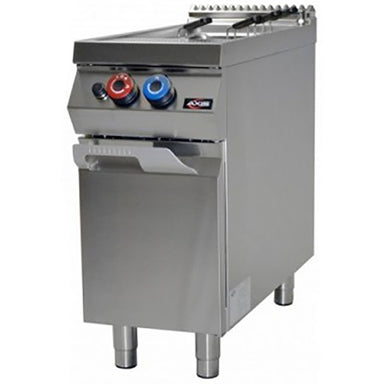
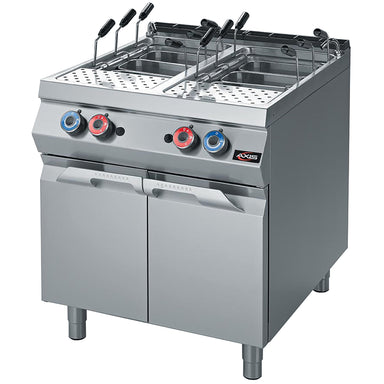
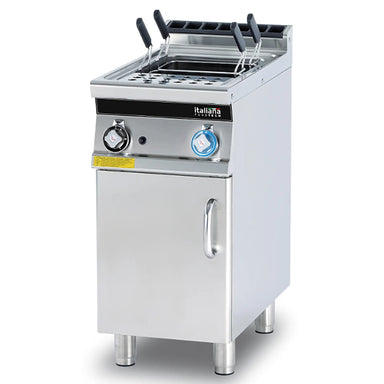
For a pasta-focused kitchen running higher volume than a single countertop unit can handle, Phoenix Food Equipment's Pasta Cookers collection covers full-size, floor-standing gas and electric pasta boilers built for a steady dinner rush. Alpha's APC-1, Atosa's PCG9 and PCG18, and Axis's AX-GPC-1 and AX-GPC-2 bring single and double well natural gas/propane pasta cookers with the higher BTU output a floor unit needs to keep multiple baskets at a rolling boil at once. Italiana Food Tech rounds out the lineup with both gas (G74, G78) and electric (E74, E78) single and double well models, Italian-built for kitchens that want a true pasta-house setup. Every model here holds a larger water volume than a countertop cooker and is built to sit permanently on the line rather than move on and off a counter between shifts. We stock and ship pasta cookers out of Vaughan to kitchens across Toronto, Mississauga, Richmond Hill, and Markham, and to the rest of Canada beyond the GTA.

Frequently Asked Questions

Common questions we hear from operators.

What's the difference between a floor pasta cooker and a countertop pasta cooker?

A floor pasta cooker, like the gas models from Alpha, Atosa, Axis, and Italiana Food Tech in this collection, sits permanently on its own base as a dedicated piece of line equipment, holds more water, and runs at a higher BTU output than a countertop unit, so it reaches and holds a rolling boil faster during a steady rush. A countertop pasta cooker, like the electric models in our Countertop Pasta Cookers collection, is smaller, plugs into a standard outlet, and works well for a kitchen with lower volume or limited floor space. If your kitchen is turning out pasta dishes continuously through service rather than in occasional batches, a floor model's larger capacity and faster recovery are usually worth the extra footprint.

Should I choose a gas or electric pasta cooker?

Gas pasta cookers, like Alpha's APC-1, Atosa's PCG9 and PCG18, Axis's AX-GPC-1 and AX-GPC-2, and Italiana Food Tech's G74 and G78, bring higher BTU output and faster recovery after a basket of cold pasta drops in, which matters most in a high-volume pasta house running continuously through dinner service. Italiana Food Tech's E74 and E78 electric models are the simpler install where a gas line isn't already run to the line, and they hold their temperature well for a steady, moderate-volume operation. Gas is generally the stronger choice for the highest-volume kitchens; electric is worth it where installing a gas line isn't practical or cost-effective.

Do floor gas pasta cookers need a hood or special ventilation?

Because a floor gas pasta cooker runs an open burner under a large volume of boiling water, it generates real heat and steam output, and in most municipalities across Ontario and the rest of Canada it needs to sit under a proper exhaust hood the same way a range or griddle does, both to clear the steam and to meet local fire and health code. Electric models, like Italiana Food Tech's E74 and E78, generate less ambient heat but still produce steam from the boiling water, so a hood or adequate ventilation is still worth planning for even without an open flame. Local fire code and health inspectors have the final say, so it's worth confirming your specific hood requirements with your municipality before installation.